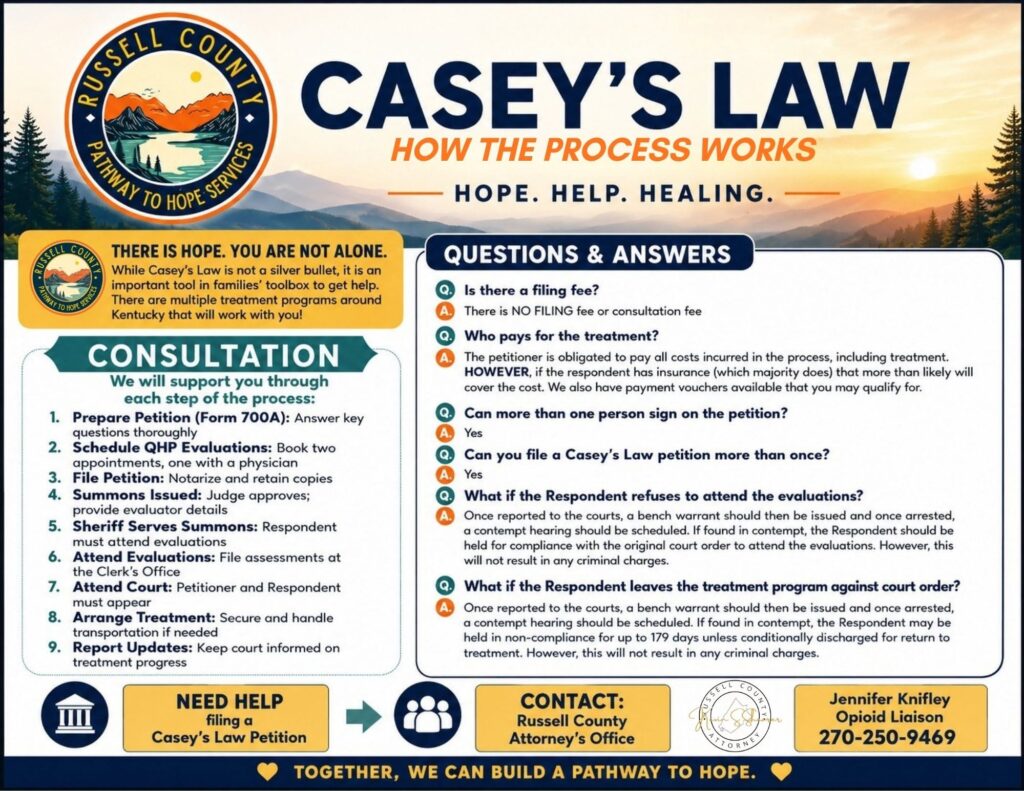
A Kentucky law gives families and friends a legal path to help a loved one battling addiction—even when that person refuses treatment.
Casey’s Law is named for Matthew Casey Wethington, who began experimenting with drugs at 14 and was arrested at 15. His drug use continued, and in 2002, he died from a heroin overdose at the age of 23.
Casey was in denial about his addiction and repeatedly refused offers of help. At the time, his family had no legal way to force him into treatment. Following his death, his mother, Charlotte Wethington, successfully fought for legislation creating a court process through which others can petition for involuntary addiction treatment.
Jennifer Knifley, Russell County’s opioid liaison with the County Attorney’s Office, says it is crucial to seek help as soon as the warning signs of substance abuse appear.
Knifley says the person filing a petition under Casey’s Law does not have to be a family member. A loved one or friend may also begin the process. She says she is available to explain each step and assist petitioners from beginning to end.
Once issued, a treatment order under Casey’s Law carries the same binding legal effect as any other court order. A person who refuses to comply could be held in contempt of court.
In part two of our report Wednesday, Knifley will explain the consultation and court-petition process, as well as how she helps locate an appropriate treatment program. She will also discuss how Operation UNITE may help cover treatment costs for people who do not have insurance.